Quick answer: Pakistan’s best adventure trips are the K2 Base Camp trek, the Gondogoro La pass, Fairy Meadows and Nanga Parbat Base Camp, Rakaposhi Base Camp, Rush Lake, the Snow Lake traverse, Deosai jeep safaris and rafting on the Kunhar and Indus rivers. The main season for high treks is late June to early September. Easier hikes in Hunza and Fairy Meadows run from May to October.
Pakistan has more high mountains packed into one corner than anywhere else on earth. There are five peaks above 8,000 m, dozens above 7,000 m, and some of the longest glaciers outside the polar regions. I have spent more than ten years leading trekkers and adventurers through Gilgit-Baltistan, and I still get goosebumps at Concordia. This guide ranks the best adventure tours in Pakistan from easy to extreme, so you can find the one that fits your fitness and your dreams.

Adventure tours at a glance
| Adventure | Region | Days | Max altitude | Difficulty | Season |
|---|---|---|---|---|---|
| Hunza day hikes | Hunza | 1 | ~3,300 m | Easy–moderate | May–Oct |
| Fairy Meadows & Beyal | Astore/Diamer | 2–3 | ~3,500 m | Easy–moderate | May–Sep |
| Nanga Parbat Base Camp | Diamer | 3–4 | ~4,000 m | Moderate | Jun–Sep |
| Rakaposhi Base Camp | Nagar | 2–3 | ~3,500 m | Moderate | May–Oct |
| Patundas plateau | Upper Hunza | 2–3 | ~4,100 m | Moderate | Jun–Sep |
| Rush Lake | Nagar | 5–6 | ~4,700 m | Challenging | Jul–Sep |
| K2 Base Camp | Baltistan | 14–21 | ~5,000 m | Challenging | Late Jun–early Sep |
| K2 & Gondogoro La | Baltistan | 18–22 | ~5,585 m | Strenuous, roped pass | Jul–Aug |
| Snow Lake (Biafo–Hispar) | Baltistan–Nagar | 18–24 | ~5,150 m | Expedition-level | Jul–Aug |
1. K2 Base Camp trek
The K2 Base Camp trek is the most famous trek in Pakistan and one of the greatest walks on earth. From Skardu you drive by jeep to Askole, the last village, and walk up the Braldu valley onto the Baltoro Glacier. Day after day you pass the Trango Towers, Paiju Peak and Masherbrum, until you reach Concordia, the “throne room of the mountain gods”, where K2, Broad Peak, the Gasherbrums and Chogolisa surround you. From Concordia it is a day’s walk to K2 Base Camp at around 5,000 m.
- Duration: 14 to 21 days from Islamabad, depending on the route and rest days.
- Season: late June to early September.
- Permit: the Baltoro is a restricted area. You need a trekking permit arranged by a licensed operator.
- Who it suits: fit hikers with multi-day trekking experience. No climbing skills are needed for the standard route.
We run it as our 19-day K2 Base Camp trek, with a full support team of guides, cooks and porters.
2. K2 and Gondogoro La circuit
Instead of walking back down the Baltoro, strong trekkers can cross the Gondogoro La (about 5,585 m) into the Hushe valley. The pass is crossed at night on fixed ropes and offers a view of four 8,000 m peaks at once at sunrise. It is a serious undertaking that depends on snow conditions, and it is not always possible. When it is, it is unforgettable.
3. Fairy Meadows and Nanga Parbat Base Camp
The perfect introduction to Pakistan’s big mountains. A jeep takes you from Raikot Bridge up an exciting track to Tato, and a walk of two to three hours brings you to Fairy Meadows, facing the Rakhiot Face of Nanga Parbat. From there, a day hike via Beyal Camp leads to the base camp viewpoint near the glacier. Most fit travellers can do it.
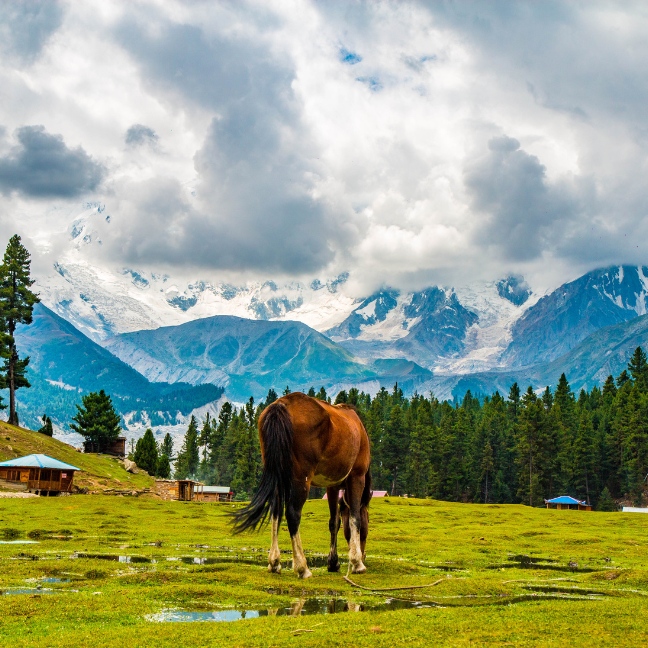
Fairy Meadows is included in our 10-day Hunza and Fairy Meadows tour. Read more on our Fairy Meadows page.
4. Rakaposhi Base Camp
From Minapin village in Nagar, a trail climbs through forest and meadow to the base camp at Tagafari, below the enormous north face of Rakaposhi (7,788 m). The walk takes about a day up and a few hours down. Many trekkers camp at the meadow to watch the mountain at sunset and sunrise. It is the best “big mountain” trek you can do from Hunza in two or three days.
5. Patundas and the Passu glaciers
Above Passu in Upper Hunza, the Patundas plateau gives a stunning view over the Batura and Passu glaciers, with the Passu Cones on the other side. It is a two- to three-day trek with camping. Shorter walks to Borith Lake and the Passu Glacier viewpoint are perfect for a half day.
6. Rush Lake
Rush Lake, at around 4,700 m above Nagar, is often called one of the highest alpine lakes in the world. The trek from Hopar follows the Miar Glacier, with views of Spantik, Miar Peak and, from the ridge, K2 far in the distance on a clear day. It is a challenging trek that needs proper acclimatisation.
7. Snow Lake and the Biafo–Hispar traverse
For experienced trekkers, the Biafo and Hispar glaciers together form one of the longest glacier systems outside the poles. Crossing the Hispar La from Baltistan to Nagar via Snow Lake is an expedition-level journey of up to three weeks on glaciers, needing ropes and glacier travel skills. It is one of the wildest treks on earth.
Jeep safaris and road adventures
Not every adventure has to be on foot. Some of Pakistan’s best experiences are on wheels:
- Deosai jeep safari: cross the high plateau between Skardu and Astore in July and August, with wildflowers, marmots and maybe a brown bear.
- Karakoram Highway to Khunjerab: drive or cycle to the highest paved border crossing in the world.
- Shandur Pass: the road between Gilgit and Chitral over the “roof of the world”.
- Shimshal road: a narrow road cut into cliffs, to one of the most remote villages in Pakistan.
Water and snow adventures
- Rafting: the Kunhar River in Kaghan and the Indus near Skardu offer summer rafting trips for different levels.
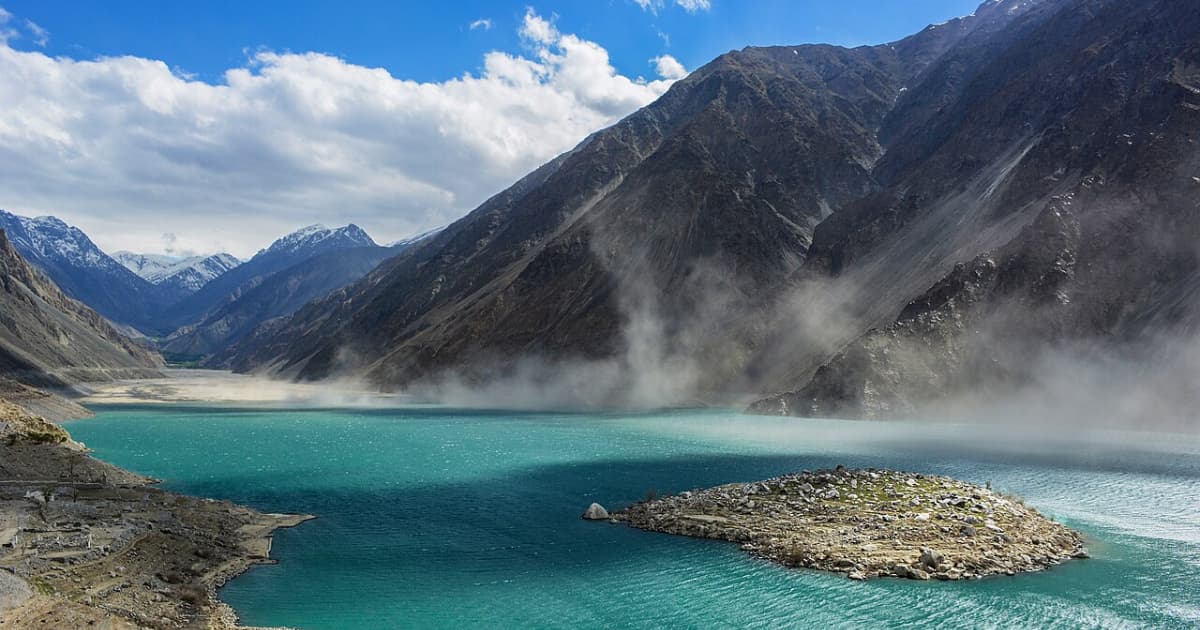
- Kayaking and boating: calm water on Attabad Lake in Hunza.
- Skiing: Malam Jabba in Swat and Naltar near Gilgit have small ski areas in winter.
- Ice climbing: frozen waterfalls in Hunza and Nagar attract experienced climbers in January and February.
How fit do you need to be?
For day hikes and Fairy Meadows, you need to be able to walk four to six hours with some climbs. For K2 Base Camp and Rush Lake, you need to walk six to eight hours a day for many days in a row, on rough glacier terrain, at high altitude. Start training at least three months before: long hill walks with a loaded daypack, stairs and cardio. The fitter you are, the more you will enjoy the trek.
Saleem’s tip: Altitude, not distance, is what stops most trekkers. Build rest days into your plan and read our altitude sickness guide before you go. A slow first week makes a strong last week.
What a day on a supported trek looks like
On a fully supported trek, your days follow a gentle rhythm. A cook boy brings tea to your tent at sunrise. After breakfast you pack a daypack while the porters and crew strike camp. You walk for five to seven hours at a steady pace with your guide, stopping for a packed lunch by a stream or under a boulder. The crew overtakes you and has the camp ready by the time you arrive. Afternoons are for resting, washing in a glacier stream, reading and watching the light change on the peaks. Dinner is cooked fresh in the mess tent: soups, rice, daal, vegetables, pasta and sometimes fresh bread. By eight o’clock most people are in their sleeping bags.
What is included on our treks
- A licensed, experienced trekking guide and, on big treks, an assistant guide.
- Cook, kitchen crew and porters, paid and equipped according to the rules for porters.
- Tents, mess tent, toilet tent, mattresses and kitchen equipment.
- All meals on the trek, with purified water.
- Trekking permits, national park fees and liaison officer where needed.
- Transport by jeep to and from the trailhead, and hotels in Skardu or Hunza.
- A satellite phone and first-aid kit for emergencies.
Gear checklist for high treks
- Broken-in waterproof trekking boots and camp shoes.
- A four-season sleeping bag rated to around -15°C for K2 or Rush Lake.
- A down jacket, fleece, waterproof shell and thermal layers.
- Trekking poles, sunglasses (category 3 or 4), sunhat and warm hat, gloves.
- A headtorch, water bottles, water purification and a personal first-aid kit.
- For Gondogoro La: crampons, harness and helmet (we can provide some items).
Why trek in Pakistan rather than Nepal?
Nepal has better-known trails and more teahouses. Pakistan has fewer people and bigger, wilder landscapes. On the Baltoro you may walk for days without seeing another group outside the peak season, and the scale of the glaciers and granite towers is something even experienced Himalayan trekkers find overwhelming. Treks here are camping trips with a full crew, which makes them feel like a true expedition.
Leave no trace in the Karakoram
The big glaciers of the Karakoram are wild, but they are not empty. Thousands of trekkers and climbers pass through every summer, and rubbish left on the Baltoro stays there for decades. On our treks we carry all waste back down, use toilet tents, and brief every guest on simple rules: no plastic left behind, no washing with soap in streams, and no new fire pits. Choosing an operator who pays and equips porters properly also matters. Porters are the backbone of every trek, and they deserve fair pay, proper clothing and insurance.
Permits, insurance and safety
- Permits: treks in restricted areas such as the Baltoro need permits through a licensed operator. Hunza, Fairy Meadows and most valleys do not.
- Insurance: choose a policy that covers trekking to the right altitude and helicopter rescue. Check that it covers the regions on your route.
- Safety: read your government’s latest advice and our Pakistan safety guide.
Ready for the Karakoram? Our trekking team has guided Baltoro and Hunza routes for years. Tell us your experience and we will match you with the right trek.
Adventure tours FAQs
What is the hardest trek in Pakistan?
The Snow Lake traverse over the Hispar La and the K2 Gondogoro La circuit are among the toughest, with glacier travel and passes above 5,000 m.
Can beginners trek in Pakistan?
Yes. Fairy Meadows, Rakaposhi Base Camp and the day hikes in Hunza are suitable for fit beginners with a good guide.
When is the best time for the K2 Base Camp trek?
Late June to early September, when the snow has melted on the Baltoro and the weather is most stable.
Do I need a guide for trekking in Pakistan?
For restricted areas like the Baltoro, a licensed operator and guide are required. For other treks, a local guide is strongly recommended for safety, route-finding and permits.