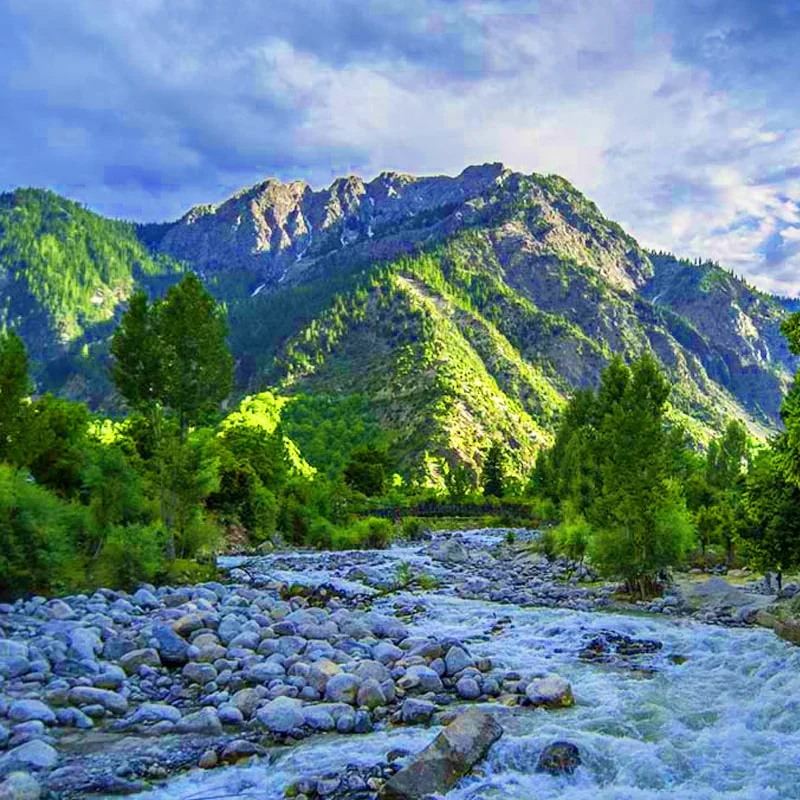
The Valley of a Thousand Lakes | Where the Kunhar River Carves a Path Through the Himalayas
261–285 km (approx. 6–8 hrs by road)
Kaghan Valley, Mansehra District, KPK
Mid-April to Late October
There is a reason the Kunhar River gets a mention in almost every sentence written about this valley. It is the spine of the place — a glacial torrent that begins somewhere above Babusar Top and runs 160 kilometres south to Balakot, gathering pine forest, meadow, and legend along the way. Naran Kaghan Valley is not one destination but a corridor of them, strung along a single winding road through the Mansehra district of Khyber Pakhtunkhwa.
Most visitors arrive knowing only one name: Saif-ul-Malook, the emerald lake beneath Malika Parbat that appears on more Pakistani postcards than perhaps any other place in the country. But the valley holds far more than its most famous lake. Beyond Naran town, the road climbs past Lulusar Lake and the alpine meadows of Battakundi toward Babusar Top, a 4,173-metre pass where the scenery shifts from pine forest to bare, wind-scoured rock in the space of a single switchback. Side valleys branch off toward Shogran and the rolling grasslands of Siri and Paye, while multi-day trails lead trekkers to Ansoo Lake and the remote, glacier-ringed waters of Dudipatsar.
Naran itself sits at 2,409 metres, a bazaar town that swells with visitors every summer and empties out under snow every winter. It is the base from which almost everything in the valley is reached, and for six months of the year it is one of the busiest mountain towns in Pakistan.


Lower Kaghan
The gateway stretch of the valley, where the road climbs out of the plains and follows the Kunhar River past Kiwai and the turn-off for Shogran. Kaghan town itself sits at around 2,134 metres and is quieter than Naran, known locally for its riverside trout restaurants and a slower pace of life.
Central Kaghan
The commercial and touristic heart of the valley. Naran bazaar is where every jeep safari begins, and the 9 km off-road track up to Lake Saif-ul-Malook is the single most-travelled route in the entire region, especially between June and August.
Upper Kaghan
The wildest stretch of the valley, where the tree line disappears and the road runs past Lulusar Lake before climbing to the 4,173-metre Babusar Pass, the gateway to Chilas and the Karakoram Highway. This section is only open from late spring to early autumn.
Snow retreats from Naran and Shogran first. Lower meadows turn green while Babusar and Lulusar remain snow-bound.
All roads and passes open, including Babusar Top. Saif-ul-Malook, Shogran, and the trekking trails are at their busiest.
Heavy rain and occasional landslides are common on the Balakot–Naran stretch. Best months for reaching Ansoo Lake once trails clear.
Crowds thin, forests turn amber and gold, and days stay clear —many longtime visitors consider this the best window in the valley.
Heavy snowfall closes the road beyond Kaghan town and shuts Babusar Top entirely. The valley returns to its year-round residents.
A demanding day-trek from the shores of Saif-ul-Malook up to the teardrop-shaped Ansoo Lake at 4,050 metres. Loose scree and thin air make this a trek for prepared, reasonably fit hikers, best attempted in July or August.
Known locally as the "Queen of Lakes," Dudipatsar sits ringed by snow-covered peaks even in high summer. The trek from Battakundi passes through pastures used by Gujar herding families, and rewards trekkers with one of the least-visited alpine lakes in the country.
A gentle, scenic walk (or jeep ride) from Shogran up to the open meadows of Siri and Paye, with wide views of Malika Parbat. One of the most popular and family-friendly day outings in the entire Kaghan Valley for families and first-time mountain visitors.
Sections of the glacier-fed Kunhar River near Naran offer beginner-to-intermediate white-water rafting, best arranged through a licensed local operator during the June–August high-water season for a safer and smoother experience with trained rafting guides.
grilled or pan-fried, sourced straight from the river and served at riverside restaurants in both Naran and Kaghan town.
a thick, spiced minced-meat patty and the most widely eaten street food across the valley's bazaars.
slow-grilled over open coals, a staple of the region's Pashtun and Hazarewal culinary tradition.
hearty, warming fare served in guesthouse dining rooms and roadside dhabas after a long day on the road.
the valley's everyday drink, often taken plain or with a touch of cardamom to warm up after a cold mountain evening.
grown in the lower valley orchards and sold as trail snacks throughout the bazaars of Kaghan and Naran.
| Season | Months | Conditions |
|---|---|---|
| Spring Opening | April – May | Lower valley greens up; Babusar Top and Lulusar may still be snowbound. |
| Peak Summer | June – August | All roads and passes open. Warmest, busiest, and most reliable window for the full valley. |
| Monsoon Window | July – August | Occasional heavy rain and landslide risk on the lower road; carry extra travel time. |
| Autumn | September – October | Fewer crowds, golden forest colour, and clear mountain air — many operators' favourite month. |
| Winter Closure | November – March | Heavy snow closes the road beyond Kaghan town; Babusar Top and Naran are inaccessible. |
Naran Kaghan Valley rewards travellers at every pace — a quick jeep run to Saif-ul-Malook for first-timers, a slow week through Shogran and Lalazar for those who want quiet, or a multi-day push to Dudipatsar for trekkers chasing solitude. Whichever pace suits you, the Kunhar River will be beside you the whole way.
At Harappa Tour & Travel, we work with local jeep drivers, licensed guides, and community-run guesthouses across Naran, Shogran, and Kaghan town to make sure your trip is comfortable, safe, and genuinely rooted in the valley you’re visiting
Your trusted partner for exploring Pakistan’s most breathtaking destinations. Locally rooted. Globally trusted. Licensed by Gilgit-Baltistan Tourism Department.